Austria Versus Vanuatu Flags: A Comparative Overview of National Symbols and Design Applications
National flags serve as powerful visual representations of a country's identity, history, and values. When comparing the Austria flag with that of Vanuatu, it becomes clear that these two symbols reflect the unique cultural and political landscapes of their respective nations. Understanding the differences between them is essential for anyone involved in design, illustration, or educational projects that require accurate and meaningful use of national emblems.
The Design and Symbolism of the Austria Flag
The flag of Austria is a horizontal tricolor consisting of three equal bands: red on top, white in the middle, and red at the bottom. This design is rooted in the country’s medieval past, representing the colors of the Babenberg dynasty. The red and white colors also appear in the Austrian coat of arms and are associated with the nation’s long-standing traditions and heritage.
In terms of design simplicity, the Austria flag is minimalistic yet striking. It features no additional symbols or patterns within its layout, which makes it highly versatile for various applications. Its clean lines and bold color contrast ensure it remains easily recognizable even from a distance or when scaled down for digital use.
The Design and Symbolism of the Vanuatu Flag
In contrast, the flag of Vanuatu is more intricate in design and symbolism. It consists of a green equilateral triangle at the hoist side, pointing towards the fly, with a yellow circle in the center. Superimposed on the circle are a black-edged red "Chief’s helmet" and a stylized representation of traditional tribal markings. The green symbolizes the land and forests, while the yellow represents the sun and unity among the people. The red and black elements are linked to the indigenous Melanesian culture and the islanders' spiritual beliefs.
This flag stands out due to its cultural depth and artistic elements, making it a compelling choice for designs that aim to highlight regional diversity or indigenous heritage. However, the complexity of its imagery can pose challenges when used in certain contexts, such as small-scale print or high-speed digital environments where clarity is crucial.
Comparative Analysis: Austria Versus Vanuatu Flags
When evaluating the Austria versus Vanuatu flags, several key factors come into play:
- Color Scheme and Contrast: Austria’s flag uses only two colors—red and white—which creates a strong, unified look. Vanuatu’s flag incorporates four distinct colors (green, yellow, red, and black), adding visual richness but potentially complicating legibility in specific scenarios.
- Simplicity vs. Complexity: The Austrian flag is straightforward and easy to reproduce accurately. Vanuatu’s flag, while beautiful, requires careful attention to detail to maintain the integrity of its symbolic elements.
- Cultural Representation: Austria’s flag reflects historical dynastic ties and a European aesthetic, whereas Vanuatu’s design is deeply tied to its native Melanesian roots and natural environment.
- Design Flexibility: For graphic designers, the Austrian flag offers broad flexibility due to its simple structure. Vanuatu’s flag may be better suited for projects that prioritize storytelling through design or emphasize cultural authenticity.
Use Cases and Best-Fit Scenarios
Choosing between the Austria and Vanuatu flags often depends on the context and purpose of the design. Here are some examples where each flag might be more appropriate:
- Official Documents and Government Materials: Austria’s flag is ideal for formal documentation due to its clarity and ease of reproduction. Its minimal design ensures it maintains its appearance across different formats and sizes.
- Educational Content and Cultural Exhibits: Vanuatu’s flag shines in settings where the goal is to educate or celebrate cultural diversity. Its detailed composition can spark interest and discussion about the country’s traditions and symbolism.
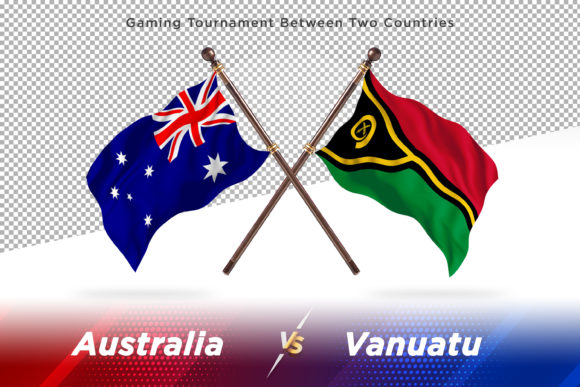
- Digital Media and Web Design: In digital illustrations like the Austria versus Vanuatu Two Flags Versus concept, both flags offer unique visual appeal. The Austrian flag works well in minimalist layouts, while Vanuatu’s flag can add vibrancy and narrative depth.
- International Events and Competitions: Both flags are commonly used in global events such as the Olympics or international summits. Their inclusion in a design bundle like Austria Versus Vanuatu Flags allows for seamless integration into multi-national graphics.
Strengths and Tradeoffs of Each Flag
Each flag has its own set of advantages and limitations when used in design or illustrative projects:
Austria Flag: Strengths and Limitations
- Strengths:
- High recognizability due to its classic and simple design.
- Easy to scale without losing clarity.
- Well-suited for backgrounds, banners, and logos.
- Limitations:
- Limited visual variation may not suit designs requiring dynamic or layered compositions.
- May lack the symbolic depth needed for culturally rich presentations.
Vanuatu Flag: Strengths and Limitations
- Strengths:
- Rich in cultural symbolism and visual storytelling.
- Ideal for educational materials, travel guides, and anthropological content.
- Offers a tropical and vibrant aesthetic that stands out in design bundles.
- Limitations:
- Complex design can be harder to replicate accurately, especially at smaller scales.
- Requires higher resolution and attention to detail to preserve its emblematic components.
Decision Factors When Choosing Between the Two Flags
When considering the Austria versus Vanuatu flags for a project, keep the following decision factors in mind:
- Project Purpose: If your goal is to represent national identity clearly and efficiently, Austria’s flag may be the better choice. If you want to convey a deeper cultural story or evoke a sense of place and tradition, Vanuatu’s flag could be more fitting.
- Technical Requirements: For large-format printing or high-resolution digital illustrations, Vanuatu’s flag will benefit from the extra detail. For simpler web-based or mobile-friendly visuals, Austria’s flag offers more adaptability.
- Target Audience: Consider who will see the final product. Audiences familiar with European aesthetics may find the Austrian flag more relatable, while those interested in Pacific cultures or indigenous art may appreciate Vanuatu’s flag more.
- Design Bundle Features: If you're using a design resource like the Austria Versus Vanuatu Flags bundle, take advantage of its layered PSD file and smart object editing capabilities. These allow for easy customization and precise layer manipulation, whether you’re adjusting colors or positioning the flags in a scene.
Practical Examples of Use
To better understand how these flags function in real-world design situations, consider the following examples:
Example 1: A travel blog comparing European and South Pacific destinations might feature the Austria and Vanuatu flags side by side to visually anchor each region. The Austrian flag would complement urban or historical themes, while Vanuatu’s flag would support content focused on nature, adventure, or cultural immersion.
Example 2: In an infographic discussing global economic development, the Austria versus Vanuatu flags could be used to differentiate data points. Austria’s flag would align well with developed economy indicators, while Vanuatu’s flag might illustrate emerging market trends or sustainability efforts in the Pacific.
Example 3: An educational presentation on national symbols could use the Austria versus Vanuatu Two Flags Versus concept to demonstrate how different countries express their identities. The layered format of the design bundle allows for interactive elements, such as highlighting individual components of each flag during a lecture or seminar.
Alternatives and Complementary Resources
While the Austria versus Vanuatu flags comparison provides valuable insight, there are other ways to incorporate flags into your work:
- Regional Flags: Depending on the scope of your project, you might also consider including regional or provincial flags to add more nuance to your design.
- Historical Flags: Some design collections include historical variations of flags, which can be useful for timelines or comparative studies.
- Customizable Bundles: Many design resources, like the Austria Versus Vanuatu Flags package, offer multiple file formats (PSD, JPEG, PNG) and smart object layers. This makes it easy to modify colors, shapes, or positions without compromising quality.
If your project involves more than just Austria and Vanuatu, many flag bundles can be expanded. You can request additional flags to create a more comprehensive visual comparison or thematic design.
Best Practices for Using the Austria Versus Vanuatu Flags Bundle
When working with the Austria versus Vanuatu Two Flags Versus illustration, here are some best practices to ensure effective use:
- Always respect the official dimensions and proportions of each flag to avoid misrepresentation.
- Use the provided smart objects in the PSD file to make edits non-destructively, preserving scalability and clarity.
- Consider the background and lighting in your design to ensure the flags remain visible and true to their original appearance.
- For multi-flag comparisons, maintain consistent spacing and alignment to enhance readability and visual harmony.
Conclusion
The Austria versus Vanuatu flags comparison highlights the importance of selecting the right national symbols based on your design goals and audience needs. Whether you’re creating a global branding campaign, an educational poster, or a digital illustration, understanding the strengths and nuances of each flag is key to making informed choices.
The Austria Versus Vanuatu Flags bundle is a valuable tool for professionals and enthusiasts alike, offering high-quality, editable assets that facilitate creative exploration. By leveraging the layered structure and multiple file formats, users can integrate these flags seamlessly into their projects while maintaining accuracy and aesthetic appeal.